
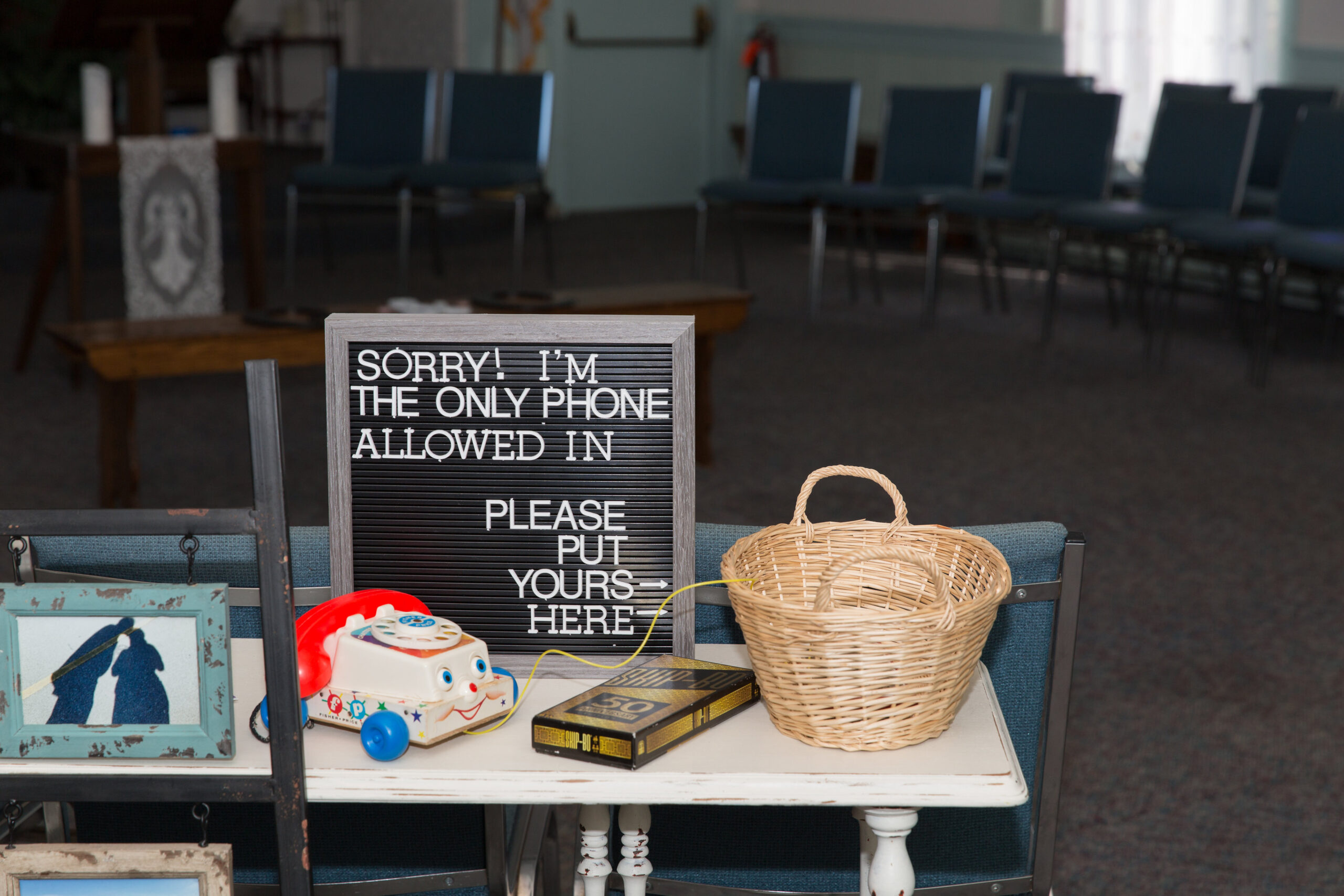
At our 2018 micro wedding, we did something a little unconventional: we placed a bright red Mattel toy phone at the entrance and asked every guest to leave their real phones behind. No photos. No videos. Just presence.
This was well before “unplugged weddings” became a trend. We simply wanted a day where everyone—us, our guests, the energy in the room—could be fully there.
What Is an Unplugged Wedding?
An unplugged wedding asks guests to set aside phones, cameras, and devices during the ceremony (and sometimes the full day). The goal isn’t to be rude—it’s to create space for what matters most: the real-time experience of your vows, your connection, and the people sharing the moment with you.
You can go fully unplugged (entire event) or ceremony-only. Some couples provide a basket or table for devices, others simply make a warm verbal request through their officiant.
Why It Felt Right for Us
After each of us experiencing the overwhelm of larger first weddings, we knew we wanted something different. A small circle of people sitting around us during our ceremony at Plymouth Spiritualist Church let us look into each person’s eyes. We could feel their support, their energy, their love.
Phones would have changed that. Screens would have come between us. Heads would have bowed to capture “the moment” instead of living it.
That Mattel toy phone became our gentle boundary: Please be here with us. This is enough.
The Gifts of Being Fully Present
When everyone puts down their devices:
Your guests witness the real you.
They see your face, hear your voice, feel the atmosphere. They become part of the memory, not just documenters of it.
You stay in your body.
No scanning the crowd for who’s filming. No posing for Instagram. Just you, your partner, and the promises you’re making.
The energy stays clean.
As someone sensitive to Spirit and presence, I can tell you: a room full of lifted phones fractures the energy. An unplugged circle holds it steady and strong.
Better photos, actually.
Your professional photographer works without distraction or obstruction. They capture authentic expressions, not staged ones.
Common Worries (and Why They Fade)
Many couples hesitate: “What if guests feel offended?” “What if we miss something?” “Won’t people want photos?”
Here’s what we’ve learned:
Most people appreciate the invitation to be present. Clear communication beforehand sets kind expectations.
Your photographer will get the shots that matter. Guests’ iPhone videos rarely match professional work anyway.
The memory lives in feeling, not footage. You’ll remember the tears in your mother’s eyes far more clearly than a shaky video.
How to Ask for an Unplugged Ceremony
Keep it warm, clear, and confident:
Through your officiant (most common):
“Friends and family, we invite you to be fully present with us during this ceremony. Please set phones and cameras aside so we can all share this moment together.”
Wedding programs or signage:
“Unplugged Ceremony: Please keep devices away so we can be fully present with one another.” (Add a toy phone image if you want to soften it like we did!)
Pre-Wedding Communication:
A line in your wedding weekend details: “We’re doing an unplugged ceremony to stay fully present with each other. Your presence is our favorite gift.”
When It’s Worth It
An unplugged ceremony shines brightest when:
- You value depth over documentation
- You’re having an intimate gathering (like a micro wedding)
- You want space to feel Spirit, energy, or sacredness in the room
- You trust your photographer to capture what matters
It’s less practical for very large weddings where corralling devices feels like herding cats.
The Memory That Lives
I still carry the feeling of that circle around us at Plymouth Spiritualist Church. The way the light fell. The sound of my husband’s voice. The quiet intake of breath when we exchanged rings.
No one needed to film it. We all lived it.
If you’re considering an unplugged ceremony, ask yourself: What do I want to feel on this day? What do I want my people to remember?
Sometimes the most meaningful moments are the ones we don’t try to capture—but simply let be.
About Me
Colleen Irwin is a psychic medium, teacher, and author who helps women navigate their Second Season of Life with clarity and confidence. Through Mediumship Development, Tarot, and spiritual mentoring, she guides women to trust their intuition and step forward into life’s next chapter

Rev. Colleen Irwin
Founder & Author
