
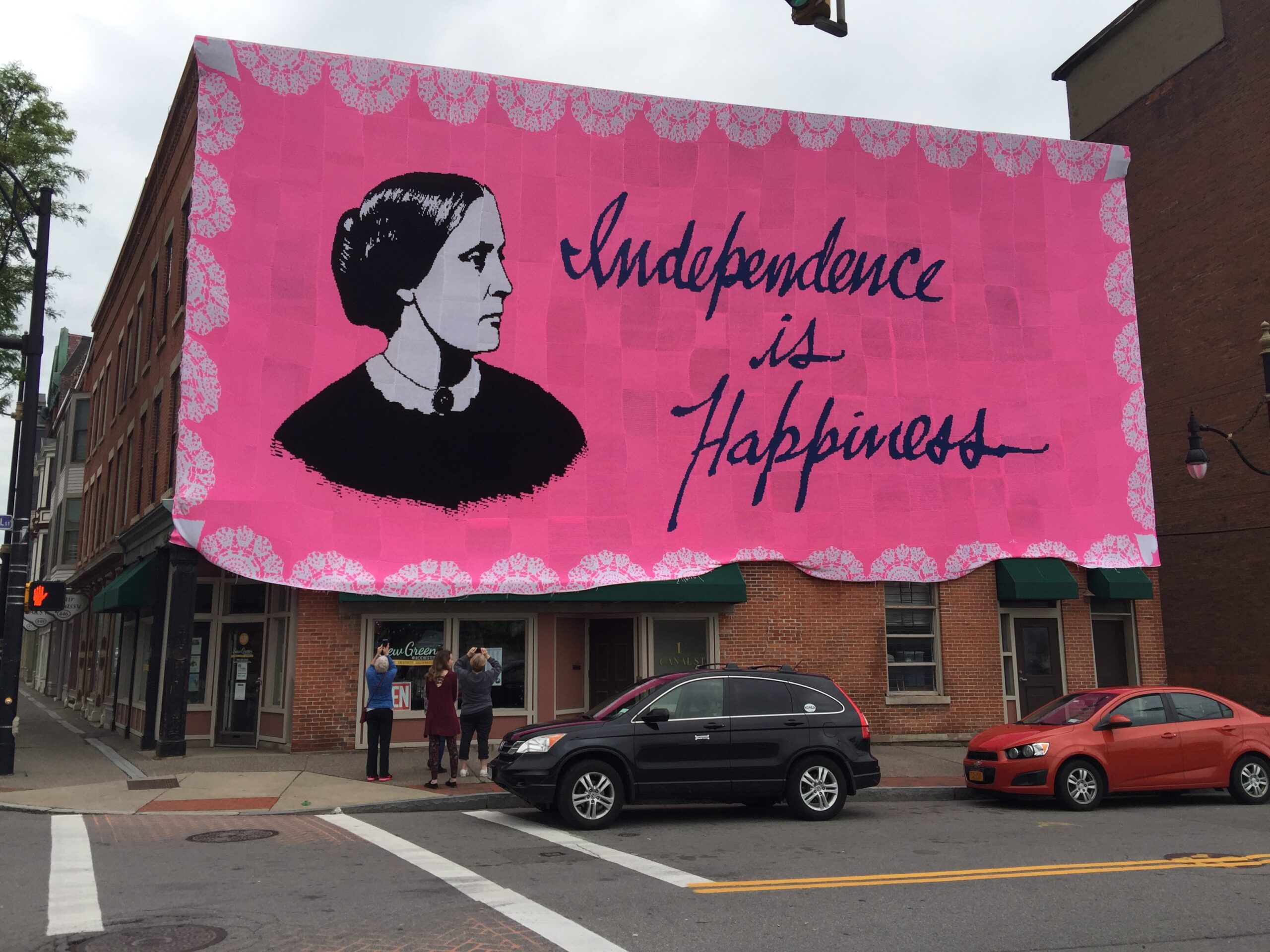
The Illusion We Inherit
Susan B. Anthony once declared, “Independence is happiness.” For generations, those words carried the weight of liberation. They promised safety, choice, and dignity—especially for women denied all three. That history matters, especially when we remember that for women of Anthony’s time, dependence often meant legal invisibility and economic risk.
Independence was never meant to signal isolation. It was about agency.
Somewhere along the way, the meaning shifted. Self-sufficiency replaced collaboration. Need became failure. Reliance became shame. What began as a demand for rights hardened into a cultural expectation to stand alone.
The phrase arrived without context. We kept the ideal and lost the humanity beneath it. Susan B. Anthony could not have done what she did alone. She often credited her sister for her success. Mary helped hold the home together and cared for their mother while Susan traveled. At the same time, she was supported by others—Elizabeth Cady Stanton, for example, would write speeches from home while Susan was away.
Independence did not emerge from isolation. It was made possible by relationship. One woman stood at the podium because another tended the quiet work behind her. History remembers the voice. It forgets the hands that made it possible.
What History Leaves Out
Mary Anthony’s labor was structural, not secondary. Her care made her sister’s independence possible. One life moved forward because another held steady. Mary was quietly accomplished in her own right—she became the first woman known to receive equal pay as a principal in the Rochester schools and stood alongside the very suffrage struggle that led to Susan’s arrest for voting in 1872, balancing professional achievement with household responsibilities.
During tours I led through the Susan B. Anthony House, my fingers would trail over the banisters Mary polished. The quiet of the back rooms drew me in, along with the smell of old wood and responsibility. At the same time, I gave a talk about Mary at Lily Dale, admiring her steadiness and respecting her devotion. I didn’t realize then that I was rehearsing for my own life. Life had been preparing me through relationship, not warning. The resonance was intentional—it was instructional.
Mary’s work was never about erasure. It was about devotion. She did not disappear behind history. She held it together.
The Body Tells the Truth
The body does not sustain illusions for long. Now that my mother-in-law is in a long-term care facility, my role has shifted. I ensure she is safe, comfortable, and cared for with dignity. Each call, visit, and conversation with staff requires attention and coordination. Care depends on presence, not willpower, and it relies on many hands—hers, my husband’s, mine, and those of the staff who support her daily.
We do not thrive alone. No one navigates vulnerability alone. No one sustains life alone.
Our culture praises autonomy while quietly relying on vast, often invisible systems of care. The body, however, insists on honesty.
Caregiving as Participation
With my husband’s support and gratitude, we share the responsibility of care. Interdependence does not distribute weight evenly, but together we make survival possible. He has the added pressure that his job supports us both. My goals and ambitions are on hold, reshaped to support our family—in a role that is mostly thankless and comes at a great cost to our emotional, physical, and economic stability. Yet we do this for someone who is vulnerable, while others wiped their hands clear of the situation.
Leaving a well-paying job to manage these responsibilities was necessary. Reality demanded that I step into care, whether I felt ready or not. This was not the collapse of ambition. It was an acknowledgment of need—and a recognition that independence alone could not meet reality’s requirements.
Shame, however, followed unexpectedly. Silence on the other end of a phone call, or at a party, made my work feel invisible and uncomfortable. That friction is where the personal lives.
Her life now depends on layered systems—medical, emotional, logistical. My own life reorganized around these needs. Interdependence became unavoidable.
Where the Myth Breaks
Independence promises control, while interdependence requires trust. Trust feels risky in a culture shaped by fear. Dependence exposes vulnerability, often mislabeled as weakness. Yet nothing meaningful survives without it. Care is not evidence of collapse. It is evidence of relationship. It is how life sustains itself across time.
Autonomy is not isolation. Strength is not distance. Spirit does not confuse the two.
A Spiritual Reframe
Spirit moves through connection and exchange, not dominance. Interdependence is not a flaw in the system. It is the system. Belief in standing alone is spiritually immature. It denies how creation functions. It rejects shared responsibility.
Maturity looks like coordination. Wisdom looks like shared weight.
What Holds
Mary’s life teaches this lesson clearly. She was not behind history—she sustained it. Her life stayed close to home, yet it was foundational. Interdependence does not oppose independence. It enables it. Every visible achievement rests on unseen steadiness.
Care has taught me patience, humility, and limits. It has also taught me reverence—for the quiet agreements that keep life intact. It has taught me the weight of hands, the sound of footsteps in hallways, the rhythm of presence that speaks louder than words.
We do not lose ourselves when we rely on others. We locate ourselves more honestly. Strength is not found in standing alone. It is found in knowing when to lean, and who to lean toward. It is the way my husband’s hand feels on my shoulder when the day has been too long.
If independence is happiness, as Susan once said, then interdependence is how that happiness is held in place. We are not meant to survive alone. We never have. In reality we were always meant to be the hands that hold, and the voice that is held.