

Not Every Insight Needs to Be Spoken
One of the clearest signs of spiritual maturity is restraint. Yet modern spiritual culture often teaches the opposite.
Many practitioners now feel pressure to immediately share every impression, every sensation, every symbolic interpretation, and every intuitive hit the moment it appears. Social media especially rewards speed, certainty, and dramatic delivery. As a result, silence is often mistaken for weakness or lack of ability.
However, ethical intuitives understand something important: just because you perceive something does not mean you should say it out loud.
That distinction matters more than many people realize.
Discernment Is Part of the Work
Real intuitive work requires more than perception. It also requires judgment. An ethical practitioner constantly asks:
- Is this helpful?
- Is this responsible?
- Am I interpreting this correctly?
- Could this create unnecessary fear or confusion?
- Does this fall outside my scope?
Without those questions, intuition can quickly become projection wrapped in spiritual language. Unfortunately, many people have been taught that accuracy alone determines spiritual ability. In reality, maturity matters far more.
A person can be intuitive and still communicate irresponsibly.
Ethical Mediumship Requires Boundaries
As a medium, I personally do not allow Spirit to diagnose the living during readings. That boundary matters to me.
At the same time, evidential information connected to those who have passed may still come through symbolically, emotionally, or physically during communication. Sometimes I may sense pressure, heaviness, pain, or illness connected to a particular area of the body.
Even then, interpretation requires caution.
For example, I once connected with a woman in Spirit where I strongly sensed significant issues around the chest area. Initially, cancer came to mind, although something about it did not feel like the direct cause of death. I think I said it “I feel like she died from something in the chest area, although I feel cancer, I don’t think it was that.”
Later, the sitter explained that her mother had survived breast cancer many years earlier but ultimately passed from a massive heart attack. She also told me that her mother was a strong Breast Cancer Advocate.
Experiences like this are exactly why ethical practitioners avoid absolute certainty. Intuitive information is not always literal. Sometimes it references medical history rather than cause of death. Occasionally, it arrives symbolically or in fragments that require interpretation.
That is why discernment matters.
Social Media Rewards Performance, Not Wisdom
Online platforms reward people who appear certain. Dramatic predictions spread quickly. Fear-based statements attract attention. Absolute claims generate engagement. Meanwhile, careful language rarely performs as well.
Because of that, many practitioners begin feeling pressure to sound definitive even when they should remain cautious. Over time, some start confusing performance with credibility.
Yet the most grounded intuitives usually sound less theatrical, not more. They pause before speaking. They choose language carefully. They avoid turning impressions into declarations.
Most importantly, they recognize the emotional weight their words can carry.
Vulnerable People Listen Closely
People often seek spiritual guidance during periods of grief, illness, trauma, uncertainty, or emotional exhaustion. In those moments, even casual statements can land with enormous psychological force. For example, telling someone:
“Spirit says this relationship is doomed”
or
“I’m sensing serious illness around you”
These statements may stay with them long after the conversation ends.
Fear has a way of embedding itself deeply. Consequently, ethical practitioners think carefully before introducing fear, certainty, or emotionally loaded claims into another person’s mind. That caution is not suppression. It is responsibility.
Silence Can Be an Ethical Choice
Some impressions are incomplete. Others may be symbolic rather than literal. Occasionally, intuition may reflect the practitioner’s own fears, biases, emotional state, or assumptions.
Responsible intuitives recognize those possibilities. Therefore, they do not treat every perception as unquestionable truth.
Instead, they allow space for uncertainty. At times, the most ethical response is:
- “I’m not fully clear on this.”
- “I don’t feel comfortable interpreting this definitively.”
- “This may be outside my scope.”
- “I think professional guidance would be more appropriate here.”
Those statements may not sound dramatic online, but they reflect integrity far more than reckless certainty ever will.
Wisdom and Certainty Are Not the Same Thing
Many people mistakenly assume spiritually advanced individuals should always sound confident. In reality, deeper wisdom often creates more humility, not less. The more someone understands human complexity, emotional vulnerability, trauma, psychology, symbolism, and projection, the more carefully they tend to speak.
That caution does not weaken intuition. Instead, it strengthens trust. Because ethical practitioners understand they are influencing real human beings — not simply creating content for engagement.
The Bigger Problem Beneath the Surface
This issue extends far beyond individual practitioners.
Modern spiritual culture increasingly rewards visibility over discernment. As audiences become more emotionally dependent on certainty, practitioners may feel pressure to continuously provide answers, interpretations, and declarations whether clarity truly exists or not.
Eventually, silence starts feeling risky. However, spirituality loses something important when people become afraid to say: “I don’t know.”
That phrase is not failure.
It is honesty.
The Bottom Line
Real intuitive work is not about saying everything that is perceived. Instead, it is about understanding what should be handled carefully, what requires humility, and what may be better left unsaid.
Ethical intuition requires more than sensitivity. It requires restraint, discernment, and responsibility.
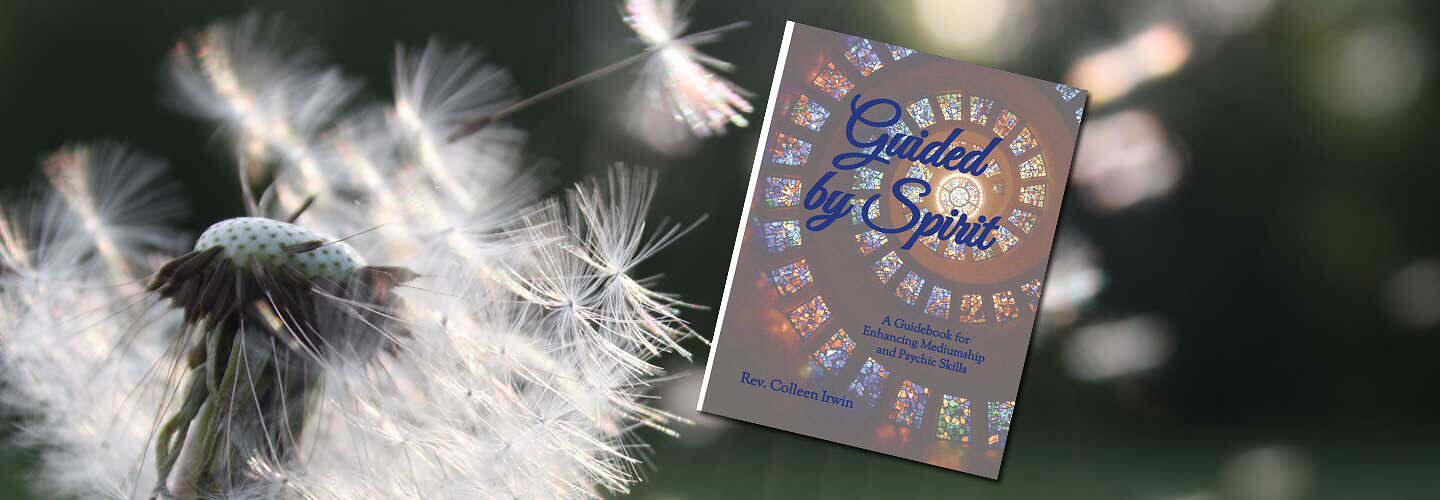
exclusive
Guided by Spirit
- Build Psychic & Mediumship Skills
- Workbook for Students & Facilitators
- How to create your own circle
Learn Tarot with Colleen
Join our Tarot Community for practice and connection.
