
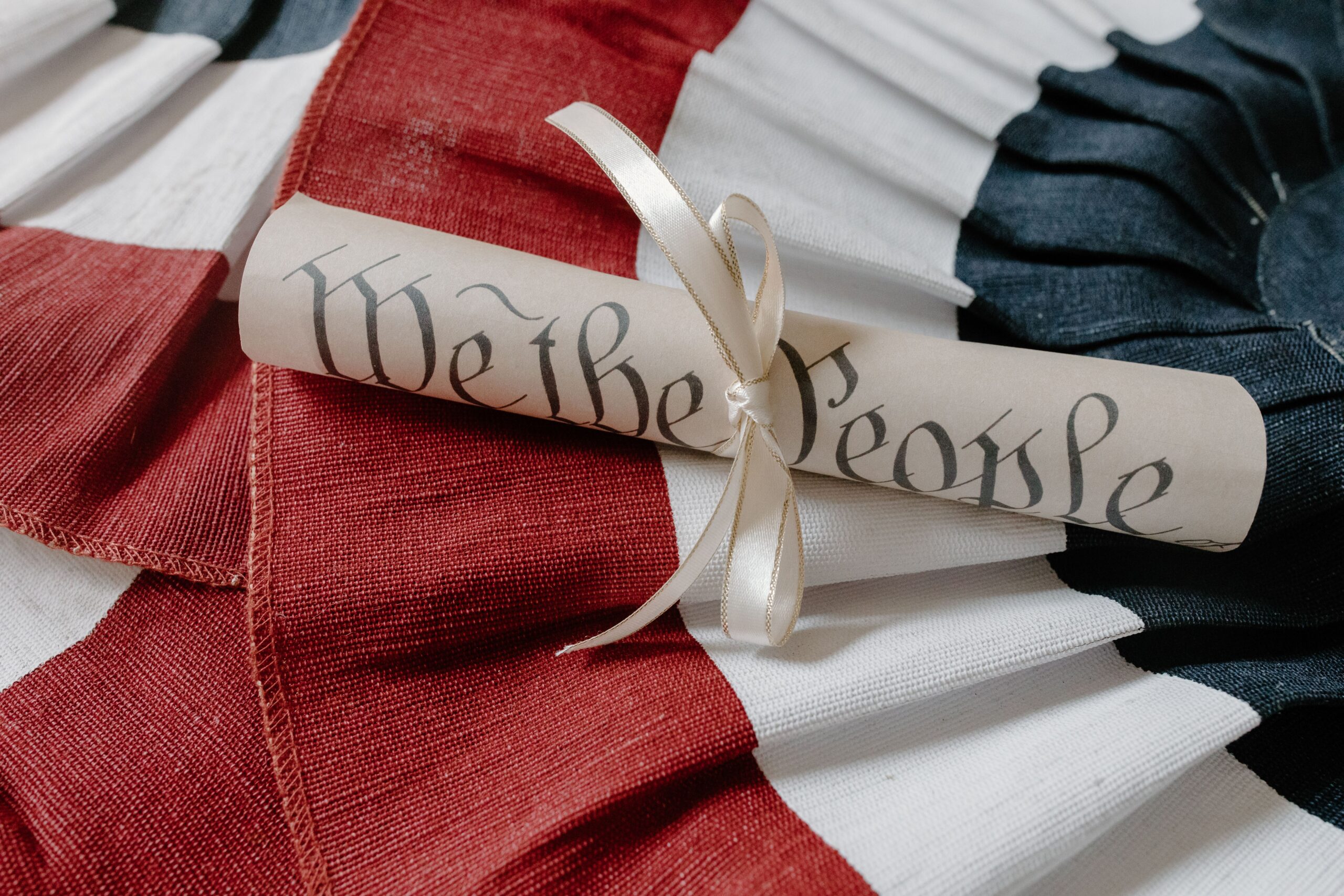
The Question That Made Me Stop and Think
Every so often, I read something that sends me down an unexpected path of reflection regarding the Founding Fathers.
Recently, I came across an article discussing why the separation of church and state remains an important principle in American government. As I read through the arguments, I found myself agreeing with many of the reasons the founders wanted government and organized religion to remain separate.
Then another thought stopped me.
Many of the same Founding Fathers who supported this separation were deeply influenced by spiritual beliefs. They spoke of Providence, a Creator, natural law, and moral responsibility. These men believed there was a source of truth and justice that existed beyond government authority.
They were not men attempting to remove spirituality from society. That realization raised a question I could not ignore. Why do we often talk about separation of church and state as though it means rejecting faith or spirituality?
Somewhere along the way, we created a false choice. We began treating spirituality and religious freedom as if they were opposing ideas. Either someone believes America should be guided by religion, or they believe faith should have no place in public life.
The more I thought about it, the less that argument made sense. The founders were not trying to create a nation without spiritual values. They were trying to create a nation where people could seek truth, faith, and meaning without government controlling that journey.
The Founders Were Not Trying to Remove Spirituality
The Founding Fathers were not a group of men who agreed on every religious question. They came from different backgrounds and held different understandings of faith.
Some were traditional Christians. Others embraced beliefs that would today be described as more philosophical or Deist in nature. They debated religion, morality, and the role of faith in society just as they debated government and liberty.
What connected many of them was not a single religious doctrine. It was the belief that human beings possessed rights that existed before government. The Declaration of Independence reflects this idea when it speaks of a Creator and rights that are endowed upon people rather than granted by rulers. This belief placed limits on government power because it suggested that governments do not create human dignity. They are responsible for protecting it.
This understanding was foundational to the American experiment.
The founders did not believe morality was irrelevant. In fact, many believed virtue was necessary for a free society to survive. They understood that laws alone could not create a good nation because laws cannot create honesty, compassion, humility, or personal responsibility.
Those qualities must come from within individuals.
They must be chosen.
The Danger of Mixing Faith and Power
To understand why the founders valued separation, we have to understand what they had witnessed before creating a new government. For generations, European governments had often been connected with established churches. Religious beliefs could become tied to political authority, and governments sometimes punished those who disagreed with officially accepted beliefs.
Many settlers came to America seeking religious freedom because they had experienced what happened when governments decided matters of faith. The founders recognized a difficult truth. When government gains control over religion, faith can become a tool of political power.
When religion gains control over government, political decisions can become confused with spiritual authority. Neither situation protects genuine belief. The purpose of separation was not to create a society without faith. It was to prevent government from deciding which faith was acceptable and which faith was not.
That protection was not only for people of different religions. It was also protection for religion itself. A belief chosen because of personal conviction is fundamentally different from a belief required by law.
Freedom of Conscience Requires Freedom of Choice
This is the part of the founders’ reasoning that I find most meaningful. Spirituality cannot be forced.
A person cannot be legislated into compassion. A law cannot create humility. A government cannot manufacture wisdom or discernment. Those qualities develop through personal reflection, experience, and choice. Authentic spirituality requires freedom.
This principle extends beyond government. It applies to any person or institution that influences others. A spiritual teacher who demands unquestioning obedience does not create growth. A community that insists there is only one acceptable path does not create understanding. A person who uses spiritual language to control others is not encouraging connection; they are exercising power.
The founders understood something important about human nature. Power has a way of changing the very things it tries to control. Perhaps that is why protecting conscience mattered so much to them.
They understood that the relationship between a person and their deepest beliefs is one of the most personal freedoms they possess.
What We May Have Forgotten
Today, conversations about religion and government often focus on proving one side right and the other side wrong. We argue about whether America was founded as a religious nation or a secular nation.
Perhaps that question misses the deeper point. The founders created a system that allowed people with different beliefs to live together. The Founding Fathers did not ask citizens to abandon faith. They did not ask citizens to surrender their conscience to government.
They created space for both belief and freedom. That may be one of the most important lessons we can learn from them today. Spirituality is strongest when it is freely chosen. Faith is most meaningful when it comes from conviction rather than obligation.
Truth is most powerful when people are allowed to seek it. The Founding Fathers did not separate church and state because spirituality was unimportant. They separated them because they understood that something as sacred as conscience should never belong to government.
Perhaps protecting spiritual freedom was not a rejection of faith. Perhaps it was one of the greatest expressions of respect for it.

exclusive
Guided by Spirit
- Build Psychic & Mediumship Skills
- Workbook for Students & Facilitators
- How to create your own circle
