
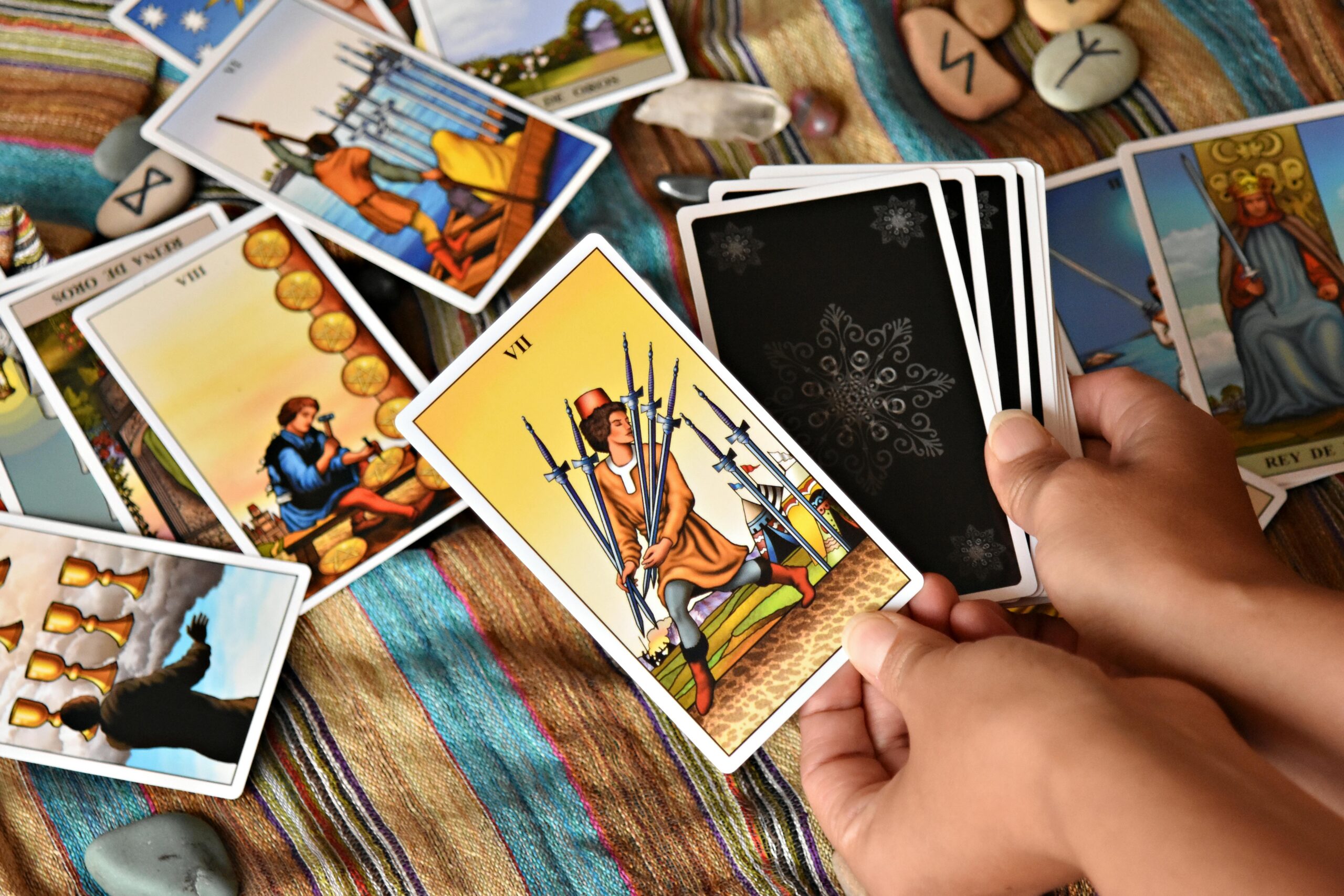

Many people approach Tarot hoping for certainty.
They want the cards to guarantee a specific outcome.
Usually, that outcome involves another person.
Will they return?
Will they commit?
Will they finally choose me?
However, Tarot cannot override free will.
No reader, spread, or spiritual practice can control human choice.
That truth makes many people uncomfortable.
Still, it remains essential to understand.
Tarot works best as guidance and reflection.
It does not exist to remove uncertainty completely.
Why People Ask Controlling Questions
Most controlling questions come from emotional fear.
People feel anxious when situations seem unstable.
Relationships especially trigger that uncertainty quickly.
As a result, many sitters seek reassurance through Tarot.
They hope the cards will restore emotional security.
Sometimes, the questions sound harmless initially.
However, the deeper motivation often reveals something different.
Questions like:
- “Will they leave their partner for me?”
- “How do I make them commit?”
- “Can I get them back permanently?”
usually center around control rather than clarity.
That distinction matters enormously.
A responsible reader notices the energy behind the question.
Often, the real issue involves fear of rejection or abandonment.
The cards cannot solve those emotions directly.
Tarot Reflects Energy, Not Fixed Outcomes
One of the biggest misconceptions about Tarot remains surprisingly common.
Many people believe the future exists permanently.
They expect Tarot to predict exact events with certainty.
Life rarely functions that way.
Human choices constantly shift emotional direction and outcomes.
Because of this, energy changes continuously.
Tarot reflects the current emotional landscape.
It highlights patterns, possibilities, and momentum.
Still, people maintain free will throughout the process.
Someone may appear emotionally available today.
Tomorrow, their choices could shift entirely.
That does not mean the reading failed.
Instead, it means human behavior remains dynamic and unpredictable.
Experienced readers understand this clearly.
They avoid presenting Tarot as guaranteed destiny.
The cards provide insight, not absolute control.
Ethical Readers Redirect the Question
A responsible reader knows when to pause.
Sometimes, the original question needs reframing first.
For example:
“What does my boyfriend need to do to commit?”
places responsibility entirely on another person.
A healthier question might sound different:
“What can I understand about this relationship dynamic?”
That shift returns awareness to the sitter.
It also encourages accountability and emotional honesty.
Not every question belongs in a Tarot spread.
Some questions attempt bypassing another person’s autonomy entirely.
Others seek permission to avoid difficult conversations.
Tarot should encourage self-awareness first.
It should not become a substitute for direct communication.
That boundary protects both the reader and the sitter.
The Real Value of Tarot
At its best, Tarot helps people see clearly.
It reveals emotional patterns many avoid consciously.
Sometimes, the truth feels validating.
Other times, it feels deeply uncomfortable.
Still, clarity creates growth eventually.
Tarot becomes dangerous when people surrender personal responsibility completely.
No spread can choose your actions for you.
The cards may illuminate possibilities ahead.
However, every individual still controls their decisions.
That is where free will remains powerful.
Perhaps that uncertainty frustrates people because certainty feels safer.
Yet real growth rarely develops through certainty alone.
Tarot can offer perspective and awareness.
The final choice always belongs to the individual.
Journal Prompts
- Do my Tarot questions seek clarity or emotional reassurance?
- Where am I trying to control another person’s choices?
- What difficult conversation am I avoiding currently?
- How often do I surrender responsibility to outside guidance?
- What would trusting myself more actually look like?