
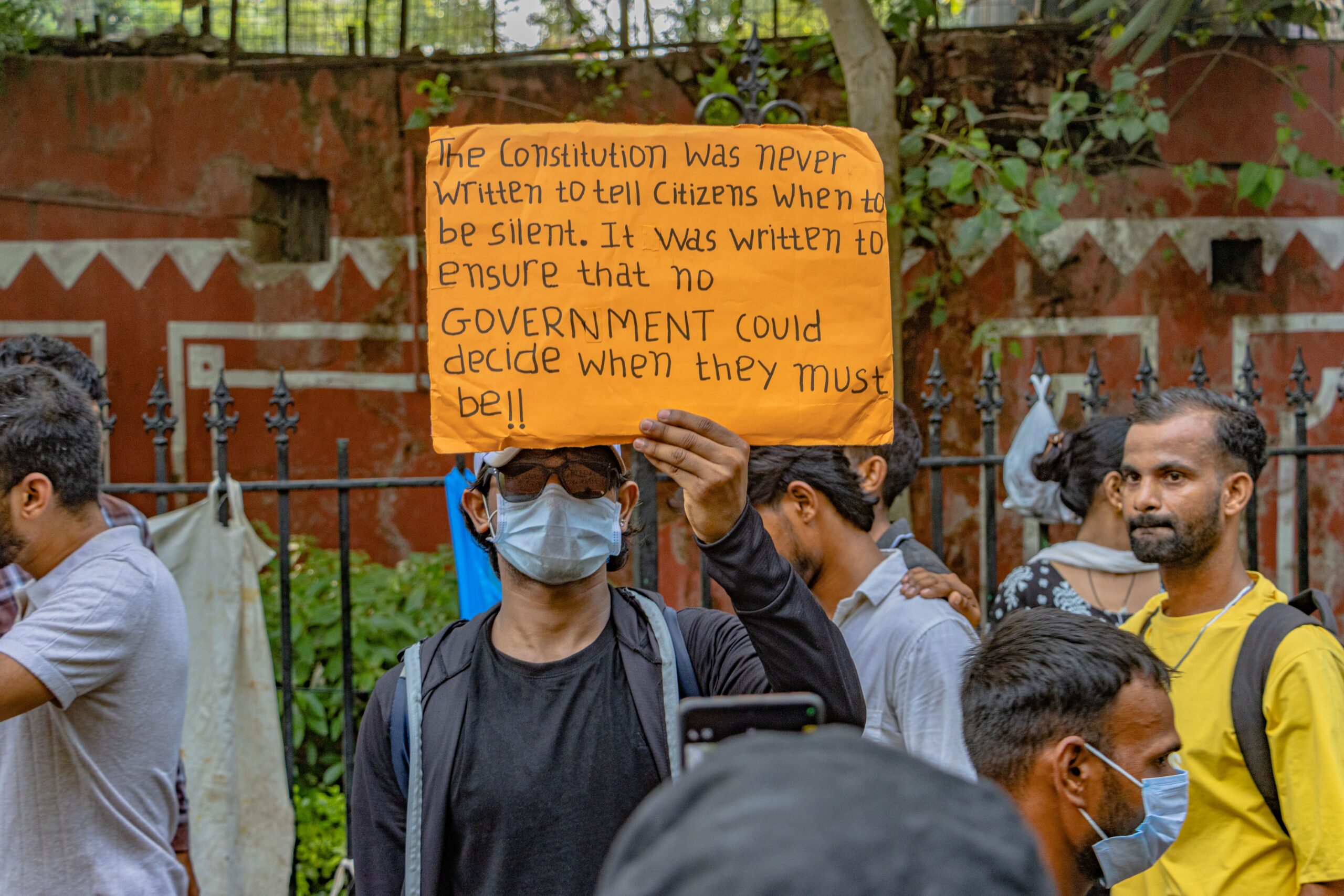
I Don’t Want Your Statement. I Want to Know What You’re Going to Do.
There is a point when a statement is no longer enough. Elected officials should tell us where they stand, and voters deserve to know what their representatives believe. But statements cannot substitute for action. When executive power tests constitutional limits, I need to know what the people I elected intend to do with the authority of their offices.
The Supreme Court’s August 24 decision involving President Trump’s election-related executive order brought me to that point again. In Trump v. California, the Court granted the administration’s request to stay a lower-court injunction. The ruling was procedural and did not finally determine the executive order’s validity. It also did not settle the broader constitutional questions that the order has raised.
That distinction matters. It also leaves Congress, New York officials, and voters with another question: What are you going to do now?
That question sits at the center of this essay. I am not asking my representatives to agree with me. I am asking them to examine the official record, consider the constitutional authority of their offices, and tell me what they intend to do.
That is a very different demand.
This Is Bigger Than Mail-In Voting
My concern isn’t simply that I disagree with the administration’s position. My concern involves the constitutional structure underneath it. The Constitution divides governmental power for a reason. It gives different responsibilities to the president, Congress, the courts, and the states.
Under the Elections Clause, state legislatures prescribe the times, places, and manner of congressional elections. Congress also has authority to make or alter those regulations. Other state institutions and federal laws can affect election administration, but the constitutional starting point matters.
The current dispute involves President Trump’s March 31, 2026, Executive Order 14399, Ensuring Citizenship Verification and Integrity in Federal Elections. The order directs federal agencies to create state citizenship lists and transmit them to state election officials. It also directs the Postmaster General to begin rule-making concerning mail-in and absentee ballots.
Those provisions matter because election administration involves both federal and state authority. The order itself invokes several federal statutes while directing federal agencies to take actions affecting election procedures. The resulting legal challenges raise questions about where federal authority ends and state authority begins.
The question isn’t simply whether I like the policy. I want to know whether the executive branch is exercising authority that Congress or the Constitution actually gives it. When serious questions arise about that authority, Congress should do more than issue a statement and wait for someone else to act.
That is why I use the phrase constitutional crisis carefully. I am not claiming that every contested executive action creates one. I am asking whether repeated challenges to constitutional limits, combined with institutional reluctance to respond, can become one.
Congress Has a Responsibility Too
We have become very good at treating political events separately. An executive order creates a controversy. Someone files a lawsuit. A judge blocks something. The administration appeals. The Supreme Court issues a decision. Then everyone moves on to the next controversy.
That process can obscure the larger question. Who protects the constitutional balance when one branch begins testing its limits?
The courts have an essential role. They can determine whether particular government actions violate the Constitution or federal law. But courts cannot replace Congress, and Congress cannot simply leave every constitutional dispute to the courts.
Congress has its own responsibilities. Members can conduct oversight, hold hearings, request documents, investigate executive actions, pass legislation, control appropriations, and clarify statutory limits. Those powers exist because the Constitution gives Congress an independent role in governing the country.
I don’t expect Congress to use every available power. I do expect members to understand those powers and decide when they should use them. And more importantly explain to the people why or why not they applicable.
I Don’t Want Congress to Hide Behind the Courts
I am grateful that courts can hear challenges to executive actions. I want those challenges heard. I want judges to enforce constitutional boundaries when government exceeds its authority.
But judicial review does not relieve Congress of its responsibilities. If members believe the executive branch has exceeded its authority, they can investigate. They can hold hearings and demand documents. They can question administration officials and examine the official record.
Congress can also legislate. It can clarify statutory authority, establish lawful conditions on federal spending, and address gaps in existing law. It can support appropriate litigation and make Congress’s constitutional position part of the public record.
None of those actions guarantees the result I want. That isn’t the point.
The point is that Congress has constitutional responsibilities of its own. Members should exercise those responsibilities instead of outsourcing every difficult question to the courts.
The Record Should Matter More Than the Party
This brings me to my biggest concern about Congress. Too often, congressional votes follow party lines. That happens with both parties, and it isn’t limited to one president or one political era. Party unity has become so strong that independent judgment can be difficult to see.
That becomes especially troubling when the question involves constitutional authority.
Members of Congress have access to information ordinary citizens don’t have. They have committees, hearings, testimony, documents, investigations, congressional counsel, and professional staff. They can examine the official record in ways most constituents cannot.
That is their job.
If my representative believes a president has exceeded constitutional authority, I don’t want to know what party leadership thinks. I want to know what my representative thinks after examining the evidence.
If they conclude that the president acted within the law, explain that conclusion. If they believe the president exceeded lawful authority, tell us what they intend to do about it.
Either answer is better than a party talking point.
The Oath Comes Before the Party
Every member of Congress takes an oath of office. That oath requires members to support and defend the Constitution and faithfully discharge the duties of their office. Article VI also requires federal and state officeholders to support the Constitution by oath or affirmation.
They did not swear an oath to support their political party. They did not swear an oath to support their party’s leadership. They did not swear an oath to support a president simply because that president belongs to their party.
They swore an oath to the Constitution.
I don’t expect an oath to make every member reach the same conclusion. Constitutional questions can involve complicated facts, competing laws, and legitimate disagreements about authority. I do expect the oath to matter when those questions arise.
If the official record supports one conclusion, follow the evidence. If it supports another, explain why. Don’t let the party decide first and the Constitution second.
Political Money Makes Independence Harder
Congress also faces a pressure we should not ignore. Modern campaigns require enormous amounts of money, and candidates spend substantial time raising it. Party organizations, donors, political action committees, and outside groups can all influence the political environment surrounding an elected official.
I have serious concerns about what Citizens United v. Federal Election Commission did to that environment. The decision expanded the ability of corporations, unions, and other organizations to make independent political expenditures. It did not create unlimited direct contributions to candidates, but it changed the landscape of political spending.
I don’t want elected officials calculating donor reactions when constitutional questions come before them. When a member decides whether another branch has exceeded its lawful authority, constitutional judgment should come before donor pressure, fundraising calculations, and party strategy.
My representative should be able to look at the record and make a decision based on what the Constitution requires.
My Vote Is Also a Message
I want to be clear about my own voting philosophy. I don’t automatically vote Democratic, but I often do. When a Democratic candidate is the person I believe should represent me, that candidate gets my vote.
That vote does not give the Democratic Party unconditional support. I expect the party to listen to its voters and respond when its elected officials fail to represent the values and constitutional principles that brought those voters to the polls.
In New York, fusion voting gives me another way to express that judgment. A candidate can appear on more than one party line. If I support a Democratic candidate who also appears on the Working Families line, I can vote for that candidate on the Working Families line.
I’m still voting for the candidate. I’m also telling the Democratic Party that I want another voice in the political conversation.
When more voters make that choice, political parties and candidates have another signal to consider. My vote remains my judgment, not a permanent commitment to a party organization.
Representation Is More Than Agreement
When I vote for someone, I don’t give them four years of automatic approval. I give them my trust to exercise public authority responsibly. They will have information I don’t have and face decisions I cannot make. They will have to exercise judgment on complicated questions.
I don’t expect them to agree with me on everything. Representation doesn’t require agreement. It requires responsible judgment and accountability to the public they serve.
Sometimes that means taking a position I dislike. Sometimes it means explaining why they believe I am wrong. Sometimes it means standing against their own party.
That last part matters.
If party loyalty prevents an elected official from challenging questionable or unconstitutional conduct, something has gone wrong. Political parties organize our politics. They do not replace the Constitution.
What Should Action Actually Mean?
When I ask my representatives what they will do, I don’t mean perform outrage. I mean use the authority their offices already possess.
For Congress, that could mean oversight hearings, document requests, testimony, legislation, appropriations, investigations, or support for appropriate litigation. It could mean making a formal constitutional position part of the congressional record. It could mean examining whether existing laws provide sufficient protection for election administration.
For New York officials, the responsibilities differ. The state can examine its own election laws, coordinate with county boards, communicate clearly with voters, and prepare for possible conflicts between federal directives and state requirements.
These actions don’t guarantee a particular outcome. They demonstrate that elected officials understand their responsibilities and use the powers available to them.
That is what I am asking for.
This Is Where Impeachment Enters the Conversation
I want to be careful with impeachment. Impeachment should not become a routine response to political disagreement, unpopular decisions, or every contested exercise of executive power.
But impeachment should not become impossible because members fear breaking with their party.
The House has the sole power of impeachment, while the Senate has the sole power to try impeachments. Those powers exist for circumstances serious enough to meet the constitutional standard of “high Crimes and Misdemeanors.”
If evidence shows that a president knowingly and persistently exceeded lawful authority, defied binding legal limits, obstructed legitimate congressional oversight, or committed other conduct that may meet that standard, Congress should examine the record.
Members should then make an independent judgment. If they believe articles of impeachment are warranted, they should write them. They should put the evidence into the record, state the constitutional grounds, and explain their reasoning.
If they believe impeachment isn’t warranted, they should explain that decision with the same seriousness. Tell constituents what evidence they considered and what constitutional standard they applied.
Don’t wait for the party to tell you what to think.
The Spiritualist Perspective
As a Spiritualist, I was taught to think for myself. Spiritualism values free thought: examining, questioning, observing, and developing our own understanding rather than accepting someone else’s conclusion simply because an authority figure offered it.
That principle does not stop at the door of politics. I cannot ask elected officials to surrender their judgment to a party, a president, or a talking point. Nor can I surrender mine.
Free thought is not the freedom to believe whatever I want. It is the responsibility to examine evidence, distinguish principle from preference, listen to contrary information, and remain willing to discover that I was wrong.
Public officials have an even greater obligation. Their oath requires them to support the Constitution. If they conclude the president acted within constitutional authority, they should make that case. If they conclude otherwise, they should say so and explain what they intend to do.
They should not outsource their conscience to their party. And neither should I.
I Am Asking My Representatives Directly
That is why I wrote to the people who represent me. I wrote to Senator Chuck Schumer, Senator Kirsten Gillibrand, and Representative Joe Morelle. Each office carries different responsibilities, so I asked questions appropriate to each position.
I want to know what Schumer will do through his Senate leadership role. I want to know what Gillibrand will do as one of New York’s senators. I want to know what Morelle will do through his House responsibilities.
I don’t need them to agree with every conclusion I have reached. I need them to explain their constitutional reasoning and tell me what action they believe their office requires.
I also contacted New York officials because election administration doesn’t belong entirely to Washington. Governor Kathy Hochul, Attorney General Letitia James, and the New York State Board of Elections have different responsibilities. Those responsibilities matter when federal action affects New York elections.
I want to know what they will do if federal requirements conflict with state law. I want to know how they will protect clear election procedures. I want to know how they will communicate with voters if those procedures change.
These are ordinary questions for a constituent to ask of elected officials.
I Remember What They Taught Us
I wrote these letters because citizenship requires more than voting every few years. Sometimes it means asking difficult questions. Sometimes it means demanding an answer. Sometimes it means telling the party you usually support that it must do better.
I learned in history and civics that the Constitution came before political parties. I learned that government power is divided so no one branch becomes a king. I learned that those branches must check one another. I learned that Congress has responsibilities of its own.
Spiritualism reinforced something that belongs beside those lessons: think for yourself. Examine what you are told. Question authority. Seek truth rather than simply accepting someone else’s conclusion.
Those lessons belong together.
Civics taught me that constitutional government requires independent institutions. Spiritualism taught me that free thought requires independent judgment. Both ask me to look beyond authority and examine what stands in front of me. Apparently, I was paying attention.
So when I look at what is happening now, I don’t need a political party to tell me what to think. I don’t need my representatives to give me another carefully written statement.
I want the people elected to represent me to examine the record, honor their oath, use the powers of their offices, and tell me what they intend to do.
That is what representation means to me.
Join My Free Spiritual Community
This free community is everything you need to develop your Spirituality in your Second Season of life.
