
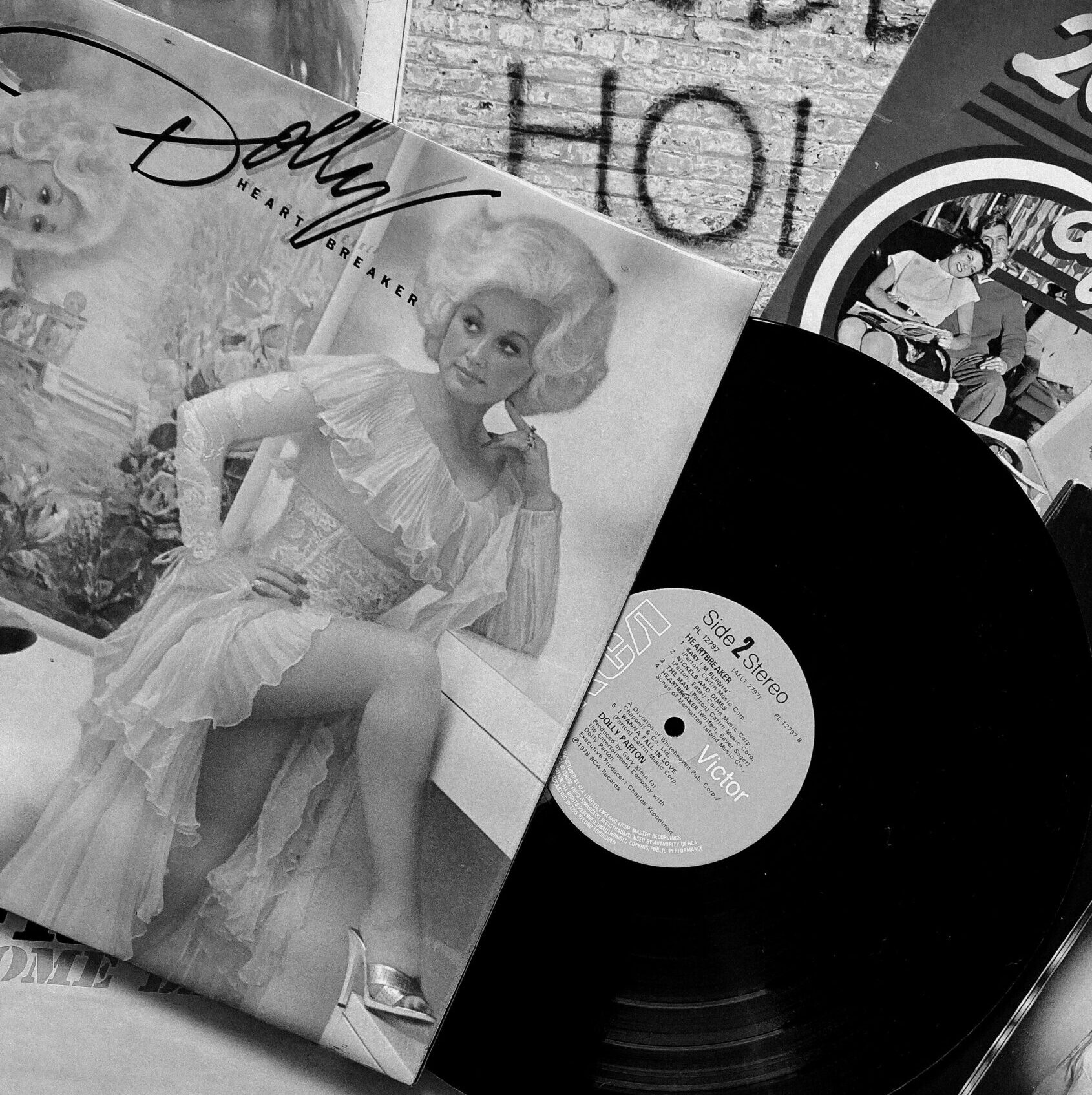
When I started this series, my purpose was simple. I wanted people to recognize Tarot cards in music. Some people see Tarot visually. They look at the cards and notice the images, symbols, colors, and expressions. I experience Tarot differently. I often hear a song when I see a card.
Sometimes the song comes immediately. Other times, I have to sit with the card before I understand why a particular song is playing in my head. The connection may be obvious, or it may take time to reveal itself. That process is what this series has always been about. I take the music of a singer or songwriter and listen for the Tarot within it, hoping that by hearing the cards in familiar songs, someone else might begin to recognize them too.
I am not trying to say that a song belongs to only one card. Tarot doesn’t work that way for me. A card can have many meanings, and those meanings change with the question, the surrounding cards, and the story being told. Sometimes two cards express different parts of the same song. Sometimes one card appears in several songs but says something different each time. The point isn’t to find the one correct answer. The point is to begin hearing the archetypes for yourself.
Let’s Talk Dolly Parton
Dolly Parton is one of those artists I have meant to write about for a long time. She was already next on my list. I kept thinking I had more time because there would always be another song to listen to, another lyric to reconsider, and another story to explore. Then Dolly died, and “eventually” suddenly became a word with a very different meaning. She died on August 25, 2026, at the age of 80, leaving behind a catalog that stretches across generations and genres.
So I went back to the music.
What I find is not a woman who fits neatly into a handful of Tarot cards. I find an artist whose songs move through the Tarot almost effortlessly. Her catalog contains poverty and abundance, love and loneliness, temptation and devotion, grief and resilience, home and leaving, searching and finding. Some songs are funny. Some are heartbreaking. Some are deeply spiritual. Some are gloriously inappropriate. Underneath all of them, I hear Dolly herself.
The Empress
For me, Dolly Parton is The Empress. Not simply because she is a woman. That would be far too easy, and it would reduce The Empress to something much smaller than she is. The Empress represents creative abundance, but abundance doesn’t simply appear. She creates it, cultivates it, and finds ways to share it with others.
That is Dolly. She doesn’t wait for someone else to create the opportunity. She sees a story that needs to be told, so she writes it. She sees a place where families could spend time together, so she builds Dollywood. She sees children who need books, so she creates the Imagination Library. She sees an audience that wants something different, so she makes a rock album at seventy-seven.
The same instinct runs through all of it. Dolly creates. Her success isn’t something handed to her; it comes from the extraordinary amount of work she puts into whatever she chooses to do. Music is only one expression of that. Business, entertainment, education, philanthropy, and the places she creates for other people all come from the same ability to look at the world and ask, *What is needed here?*
That is The Empress to me. She doesn’t simply possess abundance. She generates it.
“Just Because I Am a Woman” — The Empress
Here is The Empress standing her ground. “Just Because I Am a Woman” challenges the different standards applied to women and men. Dolly isn’t asking to be treated as fragile or protected. She is asking for fairness while refusing to apologize for being a woman.
That is part of The Empress that gets lost when we reduce her to motherhood or femininity. The Empress knows her own worth. She knows what she brings into the world. She doesn’t need someone else to validate her existence. Dolly’s relationship with The Empress goes beyond this one song, but this song lets us hear one particular expression of it: the woman who knows her value and refuses to make herself smaller.
“Rockstar” — The Empress, The World, and The Fool
We cannot talk about Dolly Parton and skip “Rockstar“. At seventy-seven, Dolly makes her first rock album. She doesn’t need it to establish her career, and she doesn’t need to prove that she belongs in another musical world. She makes it because she wants to. The album combines original songs with rock classics and collaborations across generations of music.
That is The Empress. She has accumulated a lifetime of music, relationships, experience, creativity, and influence, then gathers all of it together and creates something new. That is abundance. I also hear The World, which represents completion, integration, accomplishment, and the recognition of everything that has come before. Dolly has already accomplished an extraordinary amount, yet she continues to find pieces of herself she wants to explore.
Then there is The Fool. The Fool is willing to begin, even after everything. The Fool doesn’t need a practical reason for taking the next step. Sometimes the reason is simply, *I want to see what happens.* Dolly does exactly that, and there is something wonderfully freeing about it. It isn’t reinvention so much as freedom, and it is also The Empress at work. She creates because she can.
Where We Come From
Dolly’s songs about home and poverty give us some of the clearest examples of how two seemingly opposite Tarot cards can tell the same story.
“Coat of Many Colors” — Five of Pentacles
“Coat of Many Colors” gives us the Five of Pentacles. The card speaks of scarcity, poverty, hardship, exclusion, and the feeling of being outside the abundance that other people seem to possess. Dolly’s coat is made from scraps, so to someone looking only at material things, this is a story about not having enough. But the song transforms that meaning because the coat is made by her mother, and it carries love that money cannot buy.
That is what makes the Five of Pentacles so interesting here. The card can describe material poverty without describing spiritual poverty. Dolly can have very little and still understand herself as rich in ways that matter more. The Five of Pentacles also asks us to look toward what remains. Something may be missing, but something else is still there, and in Dolly’s song, what remains is love.
“My Tennessee Mountain Home” — Ten of Pentacles
If “Coat of Many Colors” gives us the Five of Pentacles, “My Tennessee Mountain Home” gives us the Ten of Pentacles. The Ten of Pentacles is home, family, roots, tradition, ancestry, belonging, and the things that connect us to where we come from. The song isn’t really about a building. It is about belonging and knowing where you came from.
That matters with Dolly because her childhood is marked by poverty, but her music rarely suggests that poverty means having nothing. There is family, there is music, there is place and there is love. The Five of Pentacles and Ten of Pentacles therefore become two sides of the same story. One describes what Dolly’s family does not have materially; the other describes everything they do have.
The Work of Becoming
Dolly also understands work. That may sound obvious when we look at her career, but it matters in Tarot because abundance does not simply appear. Sometimes we have to learn, practice, persist, and keep showing up.
“9 to 5” — Eight of Pentacles and Justice
“9 to 5” immediately brings me to the Eight of Pentacles. This is the card of work, skill, persistence, craftsmanship, and mastery. Talent may open a door, but success requires showing up and doing the work.
Dolly certainly understands that. We often talk about her biggest songs, but her catalog is much larger than the hits everyone knows. She has written and performed across country, pop, bluegrass, gospel, and rock while building a commercial career that spans generations. Her success isn’t separate from her creativity. The work is part of the abundance, and her music continues to earn new certifications around the world, even now.
But Justice is here, too. “9 to 5” isn’t simply about working hard. It is about being undervalued, underpaid, overlooked, and expected to accept an unfair system. The Eight of Pentacles says, *I do the work.* Justice asks, *Am I being treated fairly for doing it?*
That combination feels very Dolly to me. She understands the dignity of work, but she also understands what happens when someone else’s system benefits from that work more than the person doing it. And she doesn’t stop at doing the work herself. She uses what she builds to create opportunities for other people. She works, she succeeds, and then she creates something more with that success. The abundance keeps moving.
Love Is Rarely Simple
Dolly’s love songs give us perhaps the richest opportunity to see why I don’t believe a song has to belong to one card. Love can be connection, nostalgia, fulfillment, sacrifice, heartbreak, or several of those things at once.
“Islands in the Stream” — Six of Cups and Two of Cups
I hear two cards in “Islands in the Stream.” The Six of Cups brings tenderness, familiarity, emotional safety, and the feeling of finding something that feels almost instantly known. The Two of Cups brings the relationship itself: two people choosing each other and creating a connection that becomes its own little world.
If I had to choose one, I might lean toward the Two of Cups, but the Six of Cups is still there. I don’t see any reason to make it disappear simply because another card also fits. The song can contain both the familiarity of the Six of Cups and the partnership of the Two of Cups. Hearing both makes the song more complete.
“Old Flames Can’t Hold a Candle to You” — Six of Cups and Ten of Cups
The Six of Cups appears again in “Old Flames Can’t Hold a Candle to You” because this song looks backward. There are old loves and old memories, people who once mattered, and experiences that still exist in the emotional landscape. But something has changed. The past is no longer enough to compete with what exists now.
That brings in the Ten of Cups, which speaks of emotional fulfillment, love, and the sense that what you have now is worth more than what came before. The Six of Cups remembers, while the Ten of Cups recognizes what is here now. Together, they tell a richer story than either card alone.
“I Will Always Love You” — Eight of Cups and Two of Cups
This is one of those songs that people can hear simply as a love song, but I hear something more complicated in it. The Two of Cups acknowledges that the love is real, while the Eight of Cups acknowledges that sometimes real love is not enough reason to stay.
The Eight of Cups is often misunderstood as simply walking away. There is more to it than that. It can represent leaving something meaningful because remaining would keep us from moving forward. That makes this song particularly powerful because the love doesn’t disappear simply because the relationship ends. The person can still matter deeply while the path forward requires separation.
Sometimes walking away is not the opposite of love. Sometimes it is an expression of it. There is another reason this song matters so much to me when I think about Dolly as The Empress. Dolly wrote “I Will Always Love You” as a farewell to Porter Wagoner when she was leaving their professional partnership. She had created something valuable, and she understood that leaving did not erase what the relationship had meant.
And Then There is Elvis
The story gets even more interesting when Elvis Presley wanted to record the song. Dolly wanted that to happen badly enough that she cried when she ultimately refused the deal because Elvis’s management wanted a substantial share of the publishing. She kept ownership of her song. That decision mattered.
Years later, Whitney Houston recorded “I Will Always Love You” for *The Bodyguard*, and the song became a worldwide phenomenon. Dolly benefited because she had retained her publishing rights. Her royalties from Whitney’s version became another source of abundance that she could use to help other people.
The Empress creates, but she also understands the value of what she creates. Dolly didn’t know what the song would eventually become. She only knew that it belonged to her, and she wasn’t willing to give away what she had created simply because someone more powerful wanted it. Then she let that creation grow beyond her.
That is The Empress again. She creates something, protects it, allows it to grow, and then uses the abundance it creates to help other people. Dolly doesn’t simply hold what she has. She turns it into something more.
Two Songs From the Same Creative Fire
There is something remarkable about “I Will Always Love You” and “Jolene” as a pair. Dolly has long said the two songs came from the same extraordinary period of songwriting, although she later clarified that they may not have been written literally on the same day. Either way, they were written very close together.
Think about the emotional distance between them. “I Will Always Love You” is about letting someone go, while “Jolene” is about desperately asking someone not to take someone away. One says, *I love you enough to let you leave.* The other says, *I love him so much that I am afraid you will take him from me.*
And yet both songs come from Dolly. That is one of the reasons I don’t want to force a single Tarot card onto a song. Human emotions don’t work that neatly, and neither does Dolly’s songwriting.
“Jolene” — The Devil, The Moon, and Three of Swords
I don’t hear “Jolene” as simply The Devil, although the temptation is certainly there. The Devil represents desire, attachment, sexual competition, and the fear that something has enough power over us to make us lose control. The Moon brings uncertainty, fear, imagination, and the things we cannot know for certain. The Three of Swords brings the heartbreak that may follow.
Dolly’s narrator doesn’t know exactly what will happen. She knows what she fears. That distinction matters because The Moon lives in the space between what we know and what we imagine. The Devil gives the imagined threat power, while the Three of Swords shows us the heartbreak she is already anticipating. Three cards tell a much richer story than one.
“If You Hadn’t Been There” — The Lovers and The Star
I don’t want to choose between these two cards for “If You Hadn’t Been There“. The Lovers is connection. It is the relationship that changes us, the person whose presence alters the direction of our lives, and the choices we make through those relationships.
The Star brings something different: hope, faith, encouragement, and the person who helps us believe that something is possible before we can see it ourselves. Together, The Lovers and The Star say something much larger than romance. They speak to the person whose presence changes the trajectory of our life, someone who believes in us before we know how to believe in ourselves.
Sometimes another person changes everything simply by being there. That is a powerful kind of love.
Desire Has Its Own Tarot Language
Not every song about desire is tragic. Sometimes Dolly hears the ridiculousness of temptation and has a little fun with it.
“Here You Come Again” — Seven of Cups
“Here You Come Again” makes me smile because Tarot can be wonderfully blunt. The Seven of Cups is temptation, fantasy, emotional confusion, possibilities, and the things we know may not be good for us but still look awfully appealing.
She has herself together. She is doing fine. Then this person appears again, and suddenly all that emotional clarity becomes considerably less clear. Sometimes we don’t need someone to lie to us. We are perfectly capable of confusing ourselves, especially when temptation arrives looking very good. That is the Seven of Cups.
“Why’d You Come in Here Lookin’ Like That” — The Devil
Then we get The Devil in a completely different mood. The Devil is desire, temptation, sexuality, attachment, indulgence, and the thing we know has power over us even while we pretend it doesn’t. “Why’d You Come in Here Lookin’ Like That” is not a song about a woman who has no idea what is happening.
She knows exactly what is happening. She knows what he is doing, she knows what he looks like, and she knows what it does to her. The Devil isn’t always dark and frightening. Sometimes desire is simply desire, and knowing that doesn’t make it any less powerful. Dolly understands that kind of temptation, and she makes it funny without taking the desire out of it.
The Songs That Hurt
Dolly doesn’t avoid the darker parts of being human. Some of her songs take us into experiences where the cards become much less comfortable.
“The Pain of Loving You” — Three of Swords and Two of Cups
This is where the Swords enter the conversation. “The Pain of Loving You” isn’t about the absence of love. It is about what happens when love itself becomes painful.
That makes the Three of Swords impossible for me to ignore. It is heartbreak, emotional pain, and a wound created through connection. But there is another card sitting beside it: the Two of Cups. If there were no real connection, there would be no real wound.
That is what makes these cards work together. The Two of Cups says there is love here. The Three of Swords says that love hurts. Tarot doesn’t always give us an either/or answer. Sometimes it gives us both truths at once.
“Not for Me” — The Moon and Strength
“Not for Me” is a difficult song, and I initially heard the Four of Pentacles. There is something in the song about holding on, wanting something, and struggling with what cannot be held. But the Four of Pentacles didn’t quite reach the heart of the song for me.
The Moon did. The Moon lives in uncertainty, illusion, longing, fear, and the painful realization that what we imagined may not be what is actually available to us. There is an emotional fog here, a recognition that something we want may never become ours.
Then I hear Strength. Not the strength of conquering something, but the quieter strength of enduring it. Sometimes Strength means accepting a truth that hurts without allowing the pain to destroy you. The Moon says, *This isn’t what I thought it was.* Strength says, *I can live with that truth.*
“Down from Dover” — The Empress and Five of Pentacles
“Down from Dover” gives us another, much darker expression of The Empress. The Empress is often presented as fertility, motherhood, abundance, and nurturing. Those meanings are real, but they are not automatically joyful. Creation can also bring vulnerability, responsibility, fear, and circumstances we never expected.
The Five of Pentacles brings poverty, abandonment, isolation, shame, and the experience of being left outside when support is desperately needed. Put those cards together, and the song becomes heartbreaking. This is not the comfortable, abundant Empress we saw in *Rockstar*. This is the woman carrying something precious while lacking the support and security she needs.
The same archetype can contain both experiences. That is why I keep saying the cards have multiple meanings.
“Joshua” — The Devil and The Tower
“Joshua” takes desire somewhere more dangerous. The Devil is attraction, attachment, and the pull of something we may not be able to resist. The Tower is what happens when the structure built around that attraction cannot hold.
The combination interests me because The Tower isn’t simply destruction. It is the collapse of something that cannot continue in its present form. Sometimes we know something is unhealthy before we are willing to admit it. The Devil keeps us attached, while The Tower eventually asks what happens when attachment can no longer hold the structure together.
The Seeker
After all of that desire, heartbreak, work, family, and complicated love, Dolly also gives us songs about movement and searching.
“The Seeker” — The Hermit
“The Seeker” makes me hear The Hermit almost immediately. The Hermit isn’t the person who already knows all the answers. The Hermit is the person willing to go looking for them.
That distinction matters. The Seeker is searching for meaning, truth, understanding, and something beyond the obvious answers. That is the Hermit’s journey. The Hermit carries a light, but the light doesn’t illuminate the entire road. It illuminates enough of the road to take the next step. We don’t get the whole answer at once. We keep walking.
Dolly’s song captures that willingness to keep searching, even when certainty isn’t available.
“Travelin’ Thru” — The Fool and The World
“Travelin’ Thru” gives me both The Fool and The World. The Fool is willing to move forward without knowing exactly what comes next. The World knows that the journey has already contained many chapters. One card looks toward the road ahead, while the other understands everything that has already been traveled.
Together, they create a wonderful picture of a life in motion. You can have traveled a very long way and still be willing to see what is around the next corner. That combination feels particularly appropriate for Dolly because accomplishment never seems to become an excuse to stop exploring. Accomplishment gives her more room to create.
Hearing the Cards
The more I listen to Dolly, the less interested I become in finding one perfect card for each song. That isn’t the point of this series. The point is learning to recognize the archetype.
The Five of Pentacles can sound like poverty. The Ten of Pentacles can sound like home. The Eight of Pentacles can sound like work. Justice can sound like the demand for fairness. The Seven of Cups can sound like temptation. The Devil can sound like desire. The Moon can sound like fear and uncertainty. The Three of Swords can sound like heartbreak. The Hermit can sound like searching, while the Eight of Cups can sound like leaving even when love remains. The Lovers can sound like the person who changes your life. The Star can sound like the person who gives you hope. The World can sound like everything you have already accomplished.
And The Empress can sound like Dolly Parton.
That doesn’t mean every Dolly song is an Empress song. It means that when I listen to her body of work, I hear the creative abundance of the woman behind it. This is why I keep saying that Tarot cards have multiple meanings. We can learn the traditional meanings, but eventually we have to learn how those meanings sound in real life. We have to recognize them in stories, relationships, choices, losses, victories, temptations, mistakes, and ordinary moments.
Music gives us another way in.
You may not look at the Seven of Cups and immediately understand what temptation feels like. Then you hear “Here You Come Again,” and suddenly you do. You may not look at the Three of Swords and understand why love and pain can exist together. Then you hear “The Pain of Loving You,” and the card makes sense. You may not immediately understand The Hermit, but then Dolly starts singing about being a seeker, and suddenly you hear the person who keeps walking because the answer matters enough to find.
That is what I want this series to do. I want Tarot to become less about memorizing meanings and more about recognizing experiences.
Dolly gives us an extraordinary collection of those experiences. She sings about being poor and being rich, wanting and losing, staying and leaving, desire and restraint, home and independence, faith and doubt, heartbreak and hope. Dolly sings about being a woman. She sings about being human.
And now, when I listen to her, I hear the cards a little differently.
I thought I had more time to write about Dolly Parton. I didn’t. But perhaps there is something fitting about that. Tarot has always reminded us that life changes without asking permission. We don’t control the timing, and we don’t get to know how many chapters remain.
What we can do is listen while the song is playing. Dolly has left us quite a soundtrack.
You can find other Singers/Songwriters in this Series here.

You Were Guided Here for a Reason
Work With Colleen Irwin
Whether you are seeking clarity, validation, healing, or deeper spiritual growth, I offer readings, mentoring, and transformative experiences designed to help you move forward with confidence. Explore private sessions, upcoming classes, and events created to support your journey.
Learn Tarot with Colleen
Join our Tarot Community for practice and connection.
