
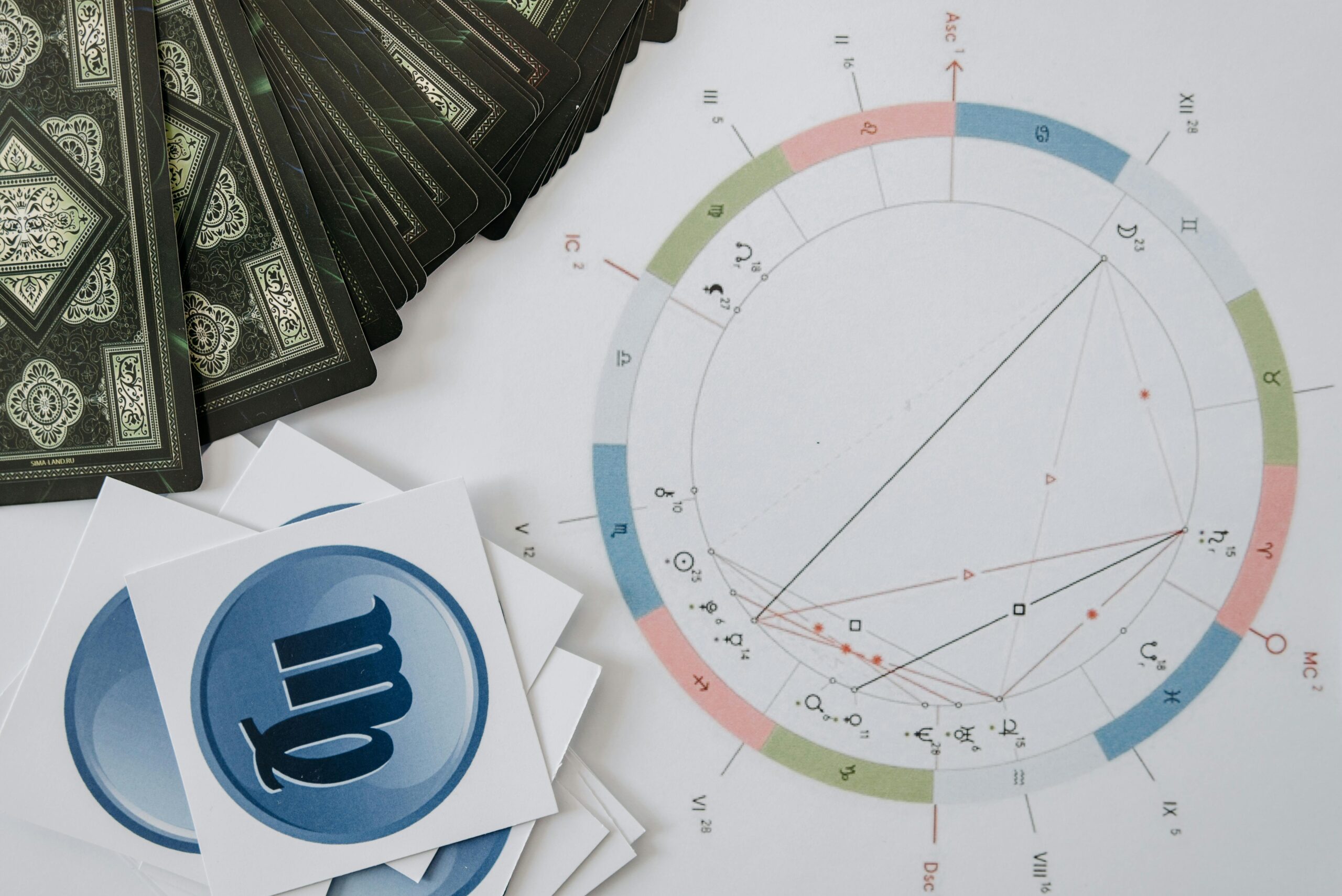

Tarot and astrology are like two different languages Spirit uses to speak to us. Each stands on its own, but when you blend them together, your understanding of a moment, a relationship, or a life lesson can deepen in powerful ways. Tarot brings in imagery, story, and emotion. Astrology adds timing, cycles, and the larger cosmic context.
If you already work with either tool, you don’t have to become an expert in the other to benefit. You just need a few key bridges between the cards and the sky.
Why Combine Tarot and Astrology?
Tarot tends to answer the “how” and “what” questions: How is this energy showing up? What am I being asked to see or do? Astrology often answers the “when” and “why”: Why is this coming up now? When is the pressure likely to shift?
When you blend them, you gain:
- A broader view of recurring patterns and lessons
- A clearer sense of timing around change and opportunity
- Confirmation, when both systems point to the same theme
- Language for both the inner experience and the outer circumstances
A simple example: a client in a Saturn-heavy transit asks about work. Their spread shows the Ten of Wands and the Hierophant. The cards affirm the weight of responsibility and the invitation to commit, while astrology explains why this period feels so serious and long-term. Together, they help the client accept the challenge instead of feeling punished by it.
Card and Zodiac Correspondences
One practical way to blend these systems is by learning basic correspondences between tarot and the zodiac signs or planets. You don’t need to memorize an entire esoteric system to get started. Begin with a few:
- Fire signs (Aries, Leo, Sagittarius) resonate with Wands: action, passion, courage
- Water signs (Cancer, Scorpio, Pisces) resonate with Cups: emotion, intuition, healing
- Air signs (Gemini, Libra, Aquarius) resonate with Swords: thought, communication, clarity
- Earth signs (Taurus, Virgo, Capricorn) resonate with Pentacles: body, resources, stability
- Then gently layer in a handful of Major Arcana connections, such as:
- The Emperor with Aries (leadership, assertion)
- Strength with Leo (heart, courage, visibility)
- Temperance with Sagittarius (integration, spiritual growth)
- The Devil with Capricorn (limits, ambition, shadow around control)
- The Star with Aquarius (vision, the future, collective healing)
You can use these correspondences in readings by paying attention when a spread contains many cards that echo the same sign or element. It might highlight an important placement in a natal chart or a current transit that’s especially loud.
Astrology-Inspired Tarot Spreads
You can also structure entire tarot spreads around astrological patterns. A few ideas:
Zodiac Wheel Spread: Lay out twelve cards in a circle, each card representing a house of life (self, money, communication, home, creativity, health, partnerships, transformation, travel, career, community, and spirituality). This offers a snapshot of where the energy is moving across your life.
Sun, Moon, Rising Spread: Three cards – one for how you shine (Sun), one for how you nurture and feel (Moon), and one for how you are seen or how you approach life (Rising). This works beautifully when you know your chart or your client’s.
Transit Support Spread: When facing a big transit—say a Pluto shift, a Saturn return, or even Mercury retrograde—pull cards for “Lesson,” “Challenge,” and “Support.” Let the astrology set the theme; let tarot show what it looks like in everyday life.
These spreads are especially helpful if you are working with clients who already know their sign placements and want their reading to feel personally tailored.
Working with Moon Phases and Tarot
The Moon is one of the easiest celestial energies to pair with the cards because we feel it in our bodies and emotions so clearly. You might:
Pull a card at the New Moon asking, “What seed am I being guided to plant?”
At the First Quarter Moon, ask, “Where do I need courage or adjustments?”
At the Full Moon, ask, “What truth is being illuminated for me to release or celebrate?”
In the Waning phase, ask, “What is ready to soften, end, or be integrated?”
Over time, tracking these pulls alongside the lunar cycle teaches you how your personal energy ebbs and flows. It also brings a sense of rhythm—your readings become part of a living relationship with the sky, not just one-off moments.
Bringing It Into Your Practice
If you’re new to astrology, start small and keep it gentle. Here are some ways to weave it in without overwhelming yourself:
Note the Sun sign and Moon sign on the day of the reading and simply notice if the cards mirror those energies.
Choose a tarot deck whose imagery feels aligned with your own Moon sign, so you’re reading from a place of emotional resonance.
When a client asks about timing, use astrology’s cycles (such as seasons, retrogrades, or their Saturn return) to frame the time window, and use tarot to describe what the experience may feel like.
Most importantly, remember that both tarot and astrology are lenses, not dictators. They offer insight, not orders. Your intuition, your lived experience, and your relationship with Spirit are what weave these tools together in a way that is unique to you.
Blending the cards with celestial insights can turn a simple reading into a rich, multi-layered conversation between you, the querent, and the cosmos itself—a sacred dialogue where the sky, the cards, and the soul all speak at once.