
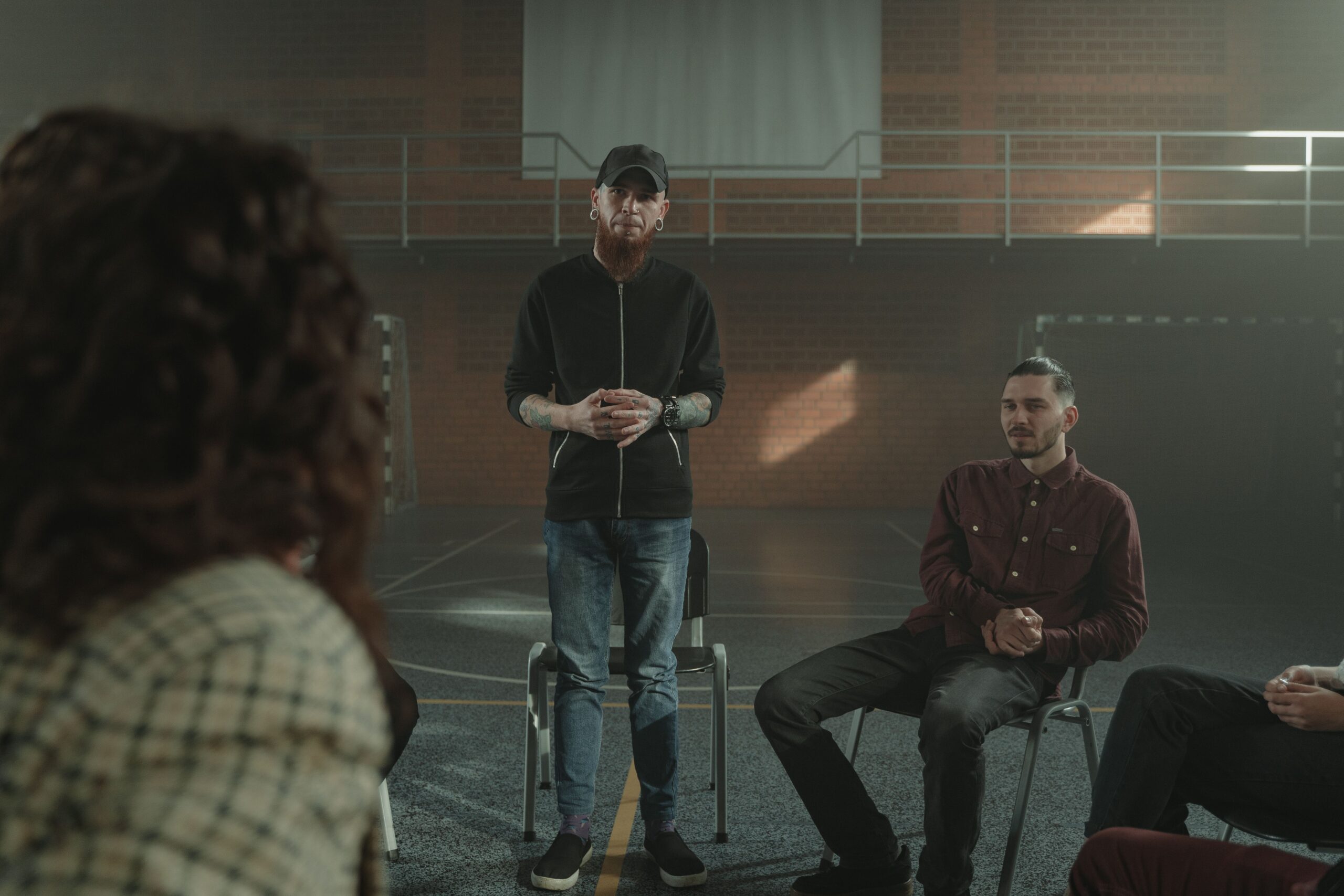
Running an open mediumship development circle means welcoming people who may be at very different points in their development. Some have years of experience. Others are just beginning to explore their abilities. Meanwhile, the people who attend regularly want to keep learning and building on what they’ve already experienced.
That creates a challenge for the facilitator. How do you help newcomers find their footing without making regular participants feel as though they’re starting over every week?
I’ve learned that the answer isn’t to stop the group and begin again. It’s to create a structure that allows newcomers to join the work already underway.
Give Newcomers a Place to Start
One way I address this challenge is through my book, Guided by Spirit. I wrote it to give other facilitators a starting point for their own circles, and it serves a similar purpose in mine.
I require participants to purchase the book before joining. Because I run the circle for free, I’m comfortable with that requirement. I also have a tip jar, but I don’t make a big deal about it. The book provides a foundation for the work we do together, rather than requiring me to introduce every concept from scratch.
Participants can read the material ahead of time, become familiar with my approach, and arrive with questions. The book also contains exercises they can practice independently, so their development doesn’t depend entirely on what happens during our meetings. It is also there when they are ready for a topic that we are not currently covering.
I’ve found that the preparation makes a noticeable difference during circle. Many of the questions I pose to the group are already in the book. Participants have had time to consider them, so when I ask those questions, I’m less likely to get the deer-in-the-headlights look followed by an awkward silence. Instead, people have something to draw on, and we can move into a more meaningful discussion.
Reading the book doesn’t give everyone the same level of experience, of course. It does give us common ground and a place to begin.
Find Out What They Already Know
When someone new wants to join the circle, I ask questions to determine their level of experience before they attend their first session. I don’t assume that a newcomer knows nothing, and I don’t expect them to understand everything we’ve already covered. Their answers help me figure out how to incorporate them into the group.
During partner exercises, I often pair newcomers with more experienced participants. I choose those partners carefully. They understand my standards, and I know they are doing the work outside the circle. I trust them to support someone new while remaining engaged in their own development.
This arrangement gives newcomers someone to work with as they become familiar with the exercises. It also allows regular participants to continue practicing rather than requiring me to lead two separate sessions. There is the added bonus that when you teach someone else, you learn something too!
The way I arrange the room matters, too. I place the pairs in a large circle so I can hear what’s happening and offer help when needed. I can monitor the work without hovering over every conversation or interrupting an exercise that is going well.
An open circle requires flexibility, but that doesn’t mean the facilitator has to manage every participant individually. Thoughtful pairings and a practical room arrangement can make a real difference.
Repeating an Exercise Doesn’t Mean Going Backward
Every so often, a regular participant will groan when I announce an exercise we’ve done before. I understand the reaction. When you’re eager to move forward, revisiting familiar material can feel like losing ground.
I remind participants that every single time I do these exercises, I learn something. Then I explain the spiral theory. We may return to the same information or exercise, but we approach it from a different angle because we’ve changed. Our experiences have accumulated. We’ve had time to practice, make mistakes, recognize patterns, and ask new questions. Something that didn’t make sense the first time may become clear on the next attempt.
I’ve also handled the occasional groan in a more hands-on way. Over the years, I’ve invited the person who complained to take my place facilitating the exercise while I join a participant. It’s an interesting change of perspective. Funny enough, I’ve never heard someone groan about repeating an exercise again after experiencing it from the facilitator’s side. I’ve done this many times, and the lesson seems to stick.
Repetition can offer an opportunity to deepen our understanding rather than simply repeat what we already know. A newcomer may be learning the basics, while an experienced participant discovers a new layer of meaning in the same exercise.
That doesn’t mean every exercise needs repeating indefinitely. The facilitator still has to make thoughtful decisions about what the group needs. But when familiar material serves a purpose, regular participants can continue learning even when someone else is just beginning.
Keep the Circle Moving
An open circle and a closed circle offer different experiences. When the same people attend a closed circle week after week, the facilitator can build on their shared progress with fewer interruptions. An open circle offers more flexibility for people to join, but that flexibility means the facilitator must continually assess the group’s needs.
For me, the goal isn’t to make everyone progress at the same pace. It’s to give newcomers a way into the work while allowing regular participants to continue developing. The book provides a shared foundation, questions help me assess experience, and partner exercises give people opportunities to learn together.
New people will continue to arrive with different backgrounds, abilities, and expectations. That’s part of running an open circle. I don’t need to make everyone start at the beginning each time someone new walks through the door. I need to find a way to bring that person into the work we’re already doing.
With preparation, thoughtful facilitation, and a willingness to adapt, an open circle can welcome newcomers without losing momentum. Everyone has a place to begin, and everyone has more to learn.

exclusive
Guided by Spirit
- Build Psychic & Mediumship Skills
- Workbook for Students & Facilitators
- How to create your own circle

